1930–2003
Vali Myers
 Arts & Culture
 Environment & Conservation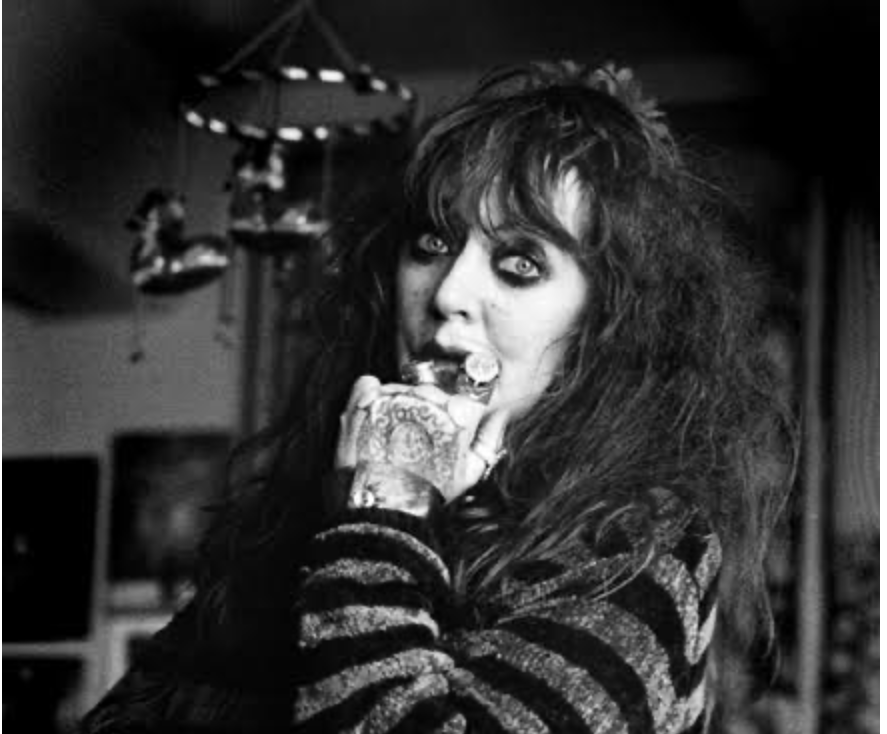
Iconic artist, dancer, and wildlife protector
“I’ve had 72 absolutely flaming years… you know love, when you live like I have you’ve done it all. I put all my effort into living… you come into the world and then you go.” 1
— Vali Myers
Vali Myers was born on 2 August 1930 in Canterbury, Sydney, and spent her early childhood exploring the bush in Belmont, New South Wales. A solitary and imaginative child, she filled her days drawing, dancing, and observing wildlife. She later remembered,
“Even when I was very young I lived in a world of my own.” 2
In 1941, Vali’s family moved to Box Hill, Melbourne. Three years later, at 14 disinterested in conventional education, with a passion for art and dance, Vali left school and home to live independently in St Kilda and pursue her dreams.
Vali worked in factories and as an art model to fund her dance lessons, and by 17 had become the lead dancer of the Melbourne Modern Ballet Company. She became known for her wild energy and striking presence. Vali recalled her teenage style:
“You should have seen me when I was 14. I used to wear purple lipstick, eye make-up, tiger lilies in my hair, always wild… my mother got it; she called it my war-paint.” 3
This bold individuality later evolved into her signature wild red hair, kohl-rimmed eyes, intricate self-made tattoos and bohemian clothing.
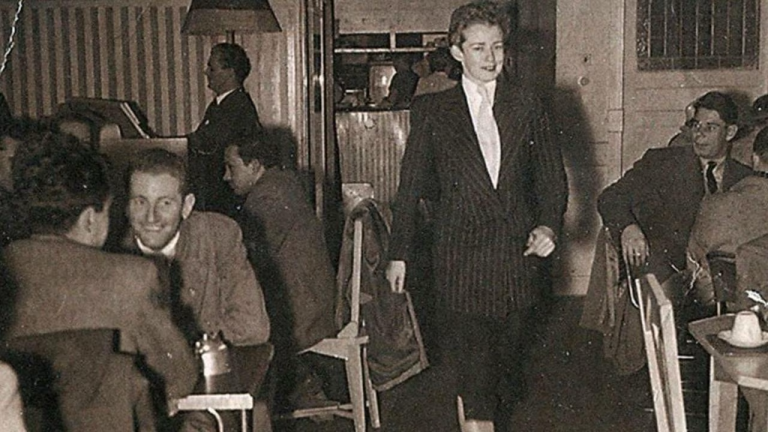
By 1949, frustrated with the conservatism of postwar Melbourne, Vali moved to Paris to further her career as a modern dancer. Yet the war-torn city was far from the romantic vision she had imagined. Vali later reflected that she survived “living like a nightbird,” 4 dancing in cafés and nightclubs and living rough on the streets of the Latin Quarter. 5
In this challenging environment, Vali’s extraordinary appearance and creative spirit captivated Parisian bohemian circles. She became a muse to numerous artists and writers, and in 1956, Dutch photographer Ed van der Elsken made her the central figure of his book Love on the Left Bank.
All the while, Vali continued to develop her signature pen-and-ink artwork: intricate, mystical drawings filled with self-portraits, animals, and spiritual symbolism. Vali reflected,
“I was dead tired of living, but I kept on working, I always worked.” 6
She carried her sketchbooks everywhere.
“That’s all I had, I had what I stood up in, you know, and I had my little portfolio with the drawings… and I wouldn’t sell them… because they belonged to me; they were part of me.” 7
In 1958, The Paris Review published a portfolio of this work.
After years of poverty, homelessness, addiction, and occasional arrests for vagrancy, Vali was deported from Paris. She wandered across Europe, until finally discovering a beautiful, remote valley near Positano, Italy. Nestled between cliffs and sea, the valley became her home and creative sanctuary for over four decades. There, she painted with ink and feathers by gaslight and cared for numerous animals, including a fox, Foxy, whom she affectionately called the love of her life.
Vali first made her life at Il Porto with her husband, Rudi Rappold. Together they found the land, resisted development and fought sustained legal and bureaucratic battles to protect the Valley and its ecosystem. Over time, artist Gianni Menichetti became both Vali’s companion and a constant presence in the valley.
Through decades of persistence, the valley was ultimately secured as a protected wildlife refuge, supported by the World Wildlife Fund. Vali said
“It’s a big oasis but I had to really battle for 30 years for it, I fought for the trees, for everything, for the water.” 8
In the 1970s, carrying her intricate, mystical artworks inspired by life, spirituality, and nature, Vali traveled to New York to sell her work. There she met and inspired other artists, musicians, and writers, and over time became a cult figure. 9
In New York Vali forged friendships with figures including Tennessee Williams, Marianne Faithfull, and Salvador Dalí. She inspired Patti Smith and tattooed a lightning bolt on her knee. Her extraordinary life and creativity were captured in interviews and films, including The Tightrope Dancer (1989) by Ruth Cullen.
Even as her art gained recognition, Vali continued living as a bohemian and devoted her earnings to protecting the valley and its animals.
In 1993, after 43 years abroad, Vali returned to Australia and was overwhelmed by the recognition of her work. She established an iconic studio in Melbourne’s Nicholas Building and began exhibiting regularly. She was embraced by local artists and the wider community, and her vibrant exuberant presence became part of the city’s creative spirit.
Fashion designer Jenny Kee reflected on Vali’s extraordinary life and personality: “She’s a goddess, she was a hippy before there were hippies, she was a bohemian before there were bohemians, she was an environmentalist before we really sort of thought about environmentalism and she’s a free spirit.” 10
Vali passed away in Melbourne in 2003, aged 72, after a short battle with cancer. True to her nature, she faced death with humour and acceptance, telling friends from her hospital bed, “Well love, I’m fine except for dying.” 11
Scattered into the Bass Strait, Vali’s ashes mark the end of her life, but her art, the protected valley of Il Porto, and her fierce commitment to animals, nature, and authentic living continue to inspire artists, environmentalists, and free spirits around the world.
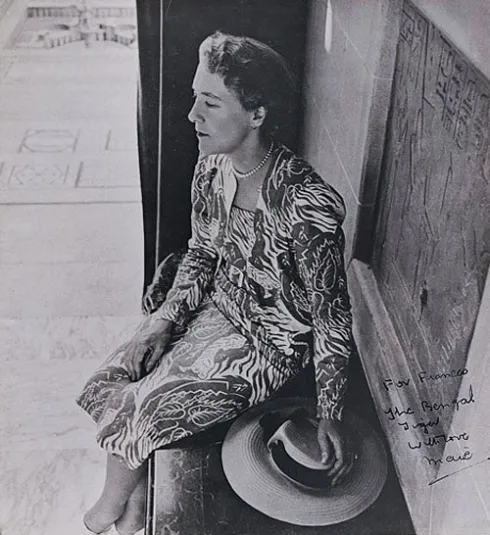
Image: Vali Myers in her studio photographs by Lina Eve
COMMEMORATION
In 1993 Vali established her studio‑gallery on the seventh floor of the Nicholas Building at 37 Swanston Street. She created a vibrant, welcoming space where she showed and sold her work and invited the public into her world for the final decade of her life. Following her passing, efforts were made by her friends and supporters to preserve the studio as Vali left it, but the physical space eventually closed.
In 2018, the Vali Myers Art Gallery Trust donated Vali’s archive including drawings, visual diaries, personal effects, and studio materials to State Library Victoria. This gift honoured her final wish to bequeath her life’s work to the people of Victoria. Vali Myers’ artistic legacy is also accessible online through the Vali Myers Art Gallery Trust website, where her work and story continue to be honoured, celebrated and shared.
VISIT
ACKNOWLEDGEMENT
Vali Myers Finding Her Biography was written by Her Place Women’s Museum in consultation with Vali Myers Art Gallery Trust.
More Information
View Similar Profiles
Inspired by her story? Explore more women whose lives and contributions have helped shape Australia’s communities, culture and history.