1912 - 1988
Maisie Carr
 Environment & Conservation
 STEM
STEM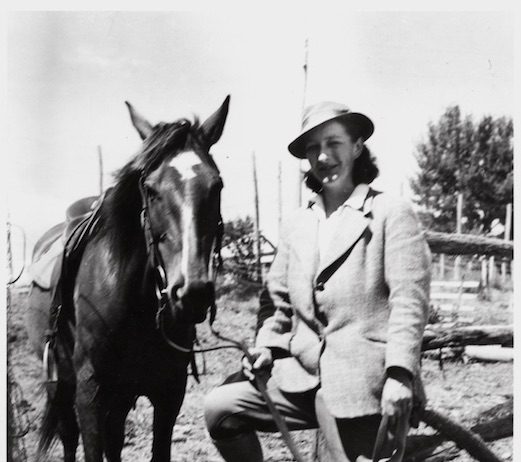
Née Fawcett
Ecologist and Botanist
The mud, the rain, the sun and the hardness of life. However, I love it, and the job I am doing is so intriguing. [1]
— Maisie Carr (Fawcett), 1944
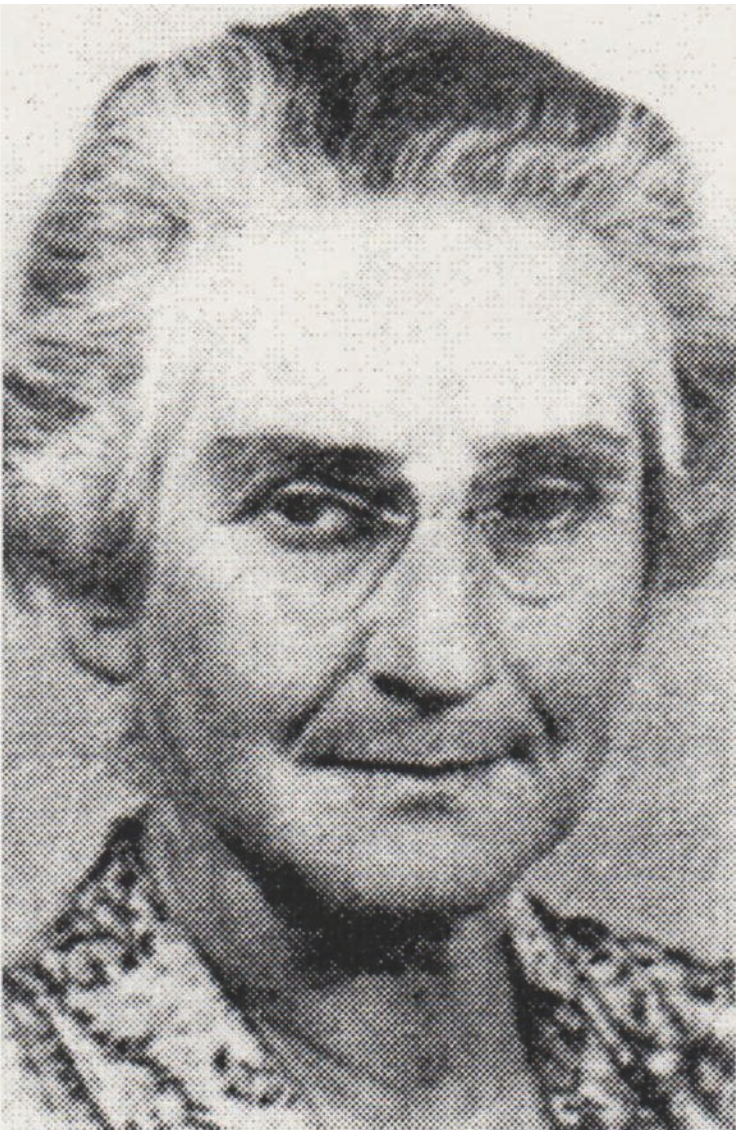
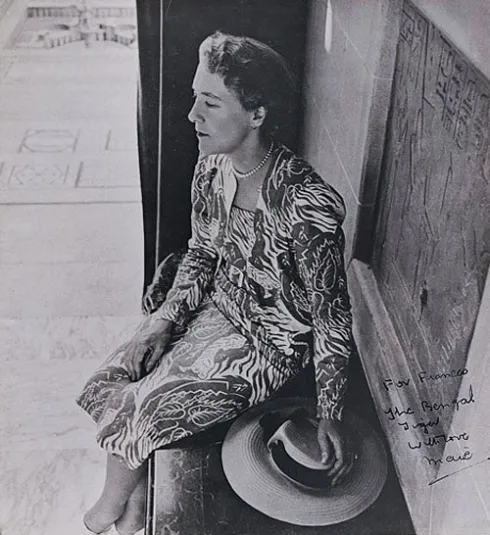
Stella Grace Maisie Carr nee Fawcett was a botanist whose work with soil erosion revolutionised farming and grazing practices throughout Victoria’s High Country.
Born and raised in Footscray, she was a keen student and won scholarship places at Melbourne High School and the University of Melbourne.
Maisie’s mentor, botany professor John Turner, recommended her for a position studying the effects of soil erosion in the Hume Reservoir catchment area. She lived on her own in Omeo and learnt to ride a horse so that she could go out with the farmers to view the soil conditions of the region.
Known as ‘The Washaway Woman’ and ‘The Woman from Pretty Valley’, she proved that common farming and grazing practices were causing soil erosion and damage to water reservoirs in the High Country. She covered vast territories on horseback and became an expert on the history and ecology of alpine Australia.
By 1949, Maisie was back at the University of Melbourne, where she was a much- loved and respected lecturer in the botany department. Frustrated by the limitations of existing texts, she oversaw the publication of The Families and Genera of Victorian Plants, which became a key textbook.
Maisie married fellow botanist Denis Carr in 1955. Together they traveled widely and worked in Belfast before moving to Canberra in 1967 to take up positions at the Australian National University. The University of Melbourne’s Maisie Fawcett Scholarships and Monash University’s D.J. and S.G.M. Carr Travelling Scholarships recognise her significant contribution to academic research.
Two of the ecological monitoring sites that Maisie set up in 1945 at Rocky Valley and Pretty Valley on Victoria’s Bogong High Plains, are still used by scientists today and have recently been added to the Victorian Heritage Register.[2]
Researchers use these plots to monitor long-term trends in vegetation, and to assess the impact of cattle on plant species diversity and abundance. Maisie’s plots are one of the longest-running scientific experiments in Australia. They are amongst the longest continual grassland monitoring projects in the world.[3]
Photo Credit: Maisie Fawcett on her horse ‘Sheila’, Bogong High Plains, 1949 – State Library of Victoria Image.
COMMEMORATION
From 1944 to 1947, Maisie established four research plots on the Bogong High Plains, laying the foundation for understanding how grazing affects alpine ecosystems. In Rocky Valley, she created a fenced exclosure to protect peatland vegetation alongside an unfenced area where cattle grazed, while in Pretty Valley she set up a grassland exclosure, fenced in 1947, with a nearby control plot open to grazing. These pioneering plots continue to be celebrated for their enduring contribution to ecological research and stand as a testament to Maisie’s vision and dedication.
VISIT
ACKNOWLEDGEMENT
Maisie Carr’s Biography was written by Her Place Women’s Museum in consultation with relative Dr Marion Manifold Artist and Art Historian.
More Information
View Similar Profiles
Inspired by her story? Explore more women whose lives and contributions have helped shape Australia’s communities, culture and history.