1903 -1995
Elsie Dorrington
 Community Service
 Politics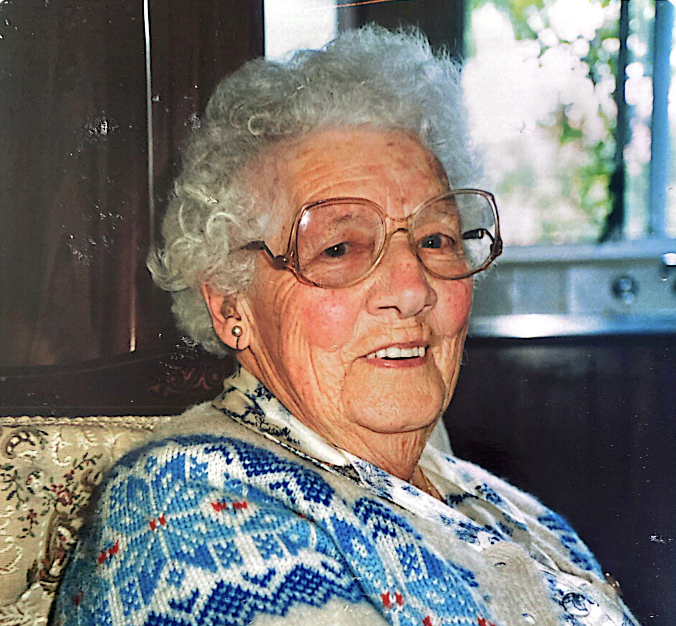
Mornington’s first female councillor
My first job will be to urge the council to set up a home-help scheme.[1]
Elsie Dorrington
Born on 17 January 1903 to George Francis Hind and Annie Amelia Hind (nee Pearce), Elsie May Dorrington became a respected community leader and the first female shire councillor on the Mornington Peninsula. From an early age, she showed a strong work ethic and sense of responsibility. When her father served abroad in World War I, she left school to help support the family, working at a local butcher’s. After his return in 1918, and on medical advice to protect his war-damaged lungs, the family moved from West Brunswick to a small farm in Mt Evelyn. [2]
In 1924, Elsie married Clyde Egerton Dorrington. They built a home on a large block of land in Birmingham Road in Mt Evelyn, in the western foothills of the Dandenong Ranges. The couple endured significant hardships, including a house fire in Mt Evelyn in 1938 and the devastating Black Friday bushfires of 1939. [3]
“When the fire arrived at Mt Evelyn, Clyde, Elsie and their children Doug, Joan and Ray sheltered in the O’Shannassy Aqueduct, which had been built in 1914 to carry drinking water from the O’Shannassy Reservoir in the Yarra Ranges east of Melbourne 82 kilometres to the Silvan Dam holding reservoir at Silvan.
Clyde and Elsie covered the children with wet blankets as the fire ranged over them.” [4]
In 1946, the family moved to Mornington. In December 1951, aged 49, Elsie broke Mornington’s all-male council tradition by winning the South Riding seat. In what was called Mornington’s “keenest election” in years, she defeated local businessman Maurice Long by 14 votes
The Shire of Mornington, established in 1871, had been governed exclusively by men until Elsie’s election, ending 80 years of all-male representation. Her groundbreaking success was credited to her dedicated grassroots campaign:
“ She handmade her own how-to-vote cards at the kitchen table, visited most of the voters in her electorate while toting her raffia bag and wearing sensible shoes, and talked to ratepayers in the streets and outside shops, outlining what she would bring to the council and asking for their votes.” [5]
As a councillor, Elsie pushed for social and infrastructural improvements. She set up the shire’s first home-help scheme, campaigned for street lights, supported women’s sports facilities, and in 1956 secured funding for one of Australia’s first roundabouts at Barkly Street, Wilsons Road, and the Esplanade.[6]
Elsie served three terms on council. When she ran for shire president, she faced sexism and resistance, with male colleagues claiming the role “was not for a woman.” In 1958, she narrowly missed becoming Mornington’s first woman shire president, losing to Bob Knowles. [7]
Elsie also made lasting contributions to her local community through extensive volunteer work. Her service began during the Second World War when she joined the Voluntary Aid Detachment as a nursing orderly. She volunteered at Lilydale Bush Nursing Hospital and later at Royal Melbourne Hospital and also supported the Veterans’ Affairs Department.
Throughout her life, Elsie was actively involved in numerous local organisations, demonstrating a lifelong commitment to service. She participated in:
- The Presbyterian Church
- The Country Women’s Association
- The “Darriman” Home for the Aged
- The Good Neighbour Council
- The Brotherhood of St Laurence’s holiday home at Morven
She also held leadership roles as president of the Mornington Citizens’ Band and later became a life member of the Mornington Eisteddfod.
In 1956, Elsie was appointed a Justice of the Peace, serving for 35 years, including at Mornington Magistrates’ Court. After her husband Clyde passed away in 1961,she managed Moorakyne Girls Hostel until retiring in 1969, then worked part-time as a cook at Beleura Private Hospital in the early 1970s.
Elsie enjoyed travelling in retirement and stayed close to her three children, ten grandchildren, and thirteen great-grandchildren. [8]
Elsie passed away after a short illness at age 92. She is remembered for her lifelong community service and for paving the way for women in political leadership.
“With an indomitable spirit, she blazed a trail for women of her generation and those who came after.” [9]
Michael Hast, Elsie Dorrington’s eldest grandson
COMMEMORATION
Elsie is honoured by the Elsie Dorrington Reserve in Mornington, a site secured for netball facilities. The site reflects her dedication to promoting women’s sports and community programs. Naming the reserve after her recognises her council leadership and lifelong commitment to improving the area. The reserve was locally known as Elsie Dorrington Reserve for many decades, with locals suggesting the name was used from the late 1960s to early 1970s. In 2013, during site upgrades, it was formally registered with Geographic Names Victoria, the state’s geographic place names authority, under the Geographic Place Names Act 1998, confirming its official status.
VISIT
ACKNOWLEDGEMENT
This biography was written by Her Place Women’s Museum using the below resources and in consultation with Elsie Dorrington’s grandchildren Michael Hast and Rhyll Dorrington.
More Information
View Similar Profiles
Inspired by her story? Explore more women whose lives and contributions have helped shape Australia’s communities, culture and history.