1858 –1923
Bella Guerin
 Activism
 Politics
 Women's Rights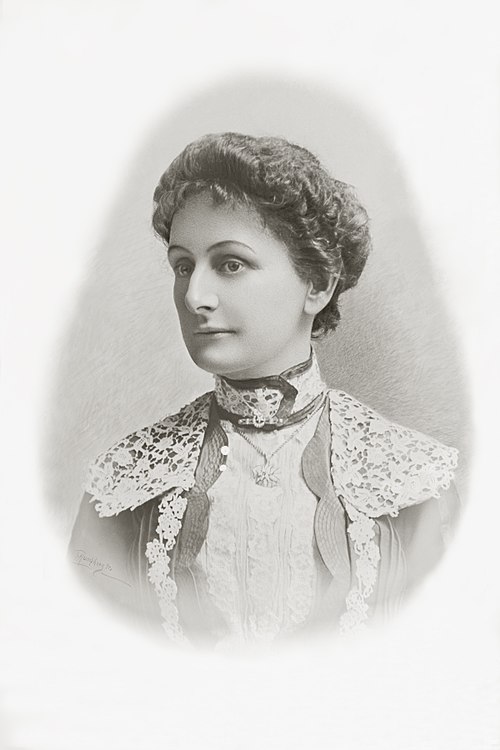
Australian suffragist, feminist, political activist and educator
Bella Guerin described her political journey as going from an ‘imperialistic butterfly’ to a ‘democratic grub’.
– Farley Kelly, Australian Dictionary of Biography
Born in Williamstown, Victoria, as Julia Guerin, to Irish-born parents, she was known for most of her life as ‘Bella’. After completing her early studies at home, she passed matriculation in 1878 and in 1883 became the first woman to graduate from an Australian university when she was awarded a Bachelor of Arts from the University of Melbourne. She later received her Master of Arts in 1885. [1]
Bella began her career as a teacher at schools including Loreto Convent, Ballarat, and later at the Ballarat School of Mines, where she was appointed to teach arts and matriculation courses. She was an advocate for women in education and encouraged female students to strive for higher education as she had done. [2] She helped develop Loreto school’s educational philosophy and urged scholarships for girls to produce ‘a band of noble, thoughtful women as a powerful influence for good’. [3]
From the mid‑1890s Bella became involved in political, suffragist and feminist circles. She actively campaigned for women’s political rights in Victoria such as women’s suffrage, gender equality, and rights for illegitimate children. She also spoke out on controversial topics such as anti-conscription.
Bella served as Vice‑President of the Women’s Political Association of Victoria from 1912 to 1914, working alongside other prominent activists and co‑authoring campaign material for Vida Goldstein, one of Australia’s best‑known suffrage campaigners.
Bella was also involved in labour and socialist politics. She spoke and wrote for the Victorian Socialist Party and the Women’s League of Socialists, and during World War I she led the Labor Women’s Anti‑Conscription Fellowship, campaigning against compulsory military service in the 1916 referendum. [4]
In 1918 she became vice‑president of the Australian Labor Party’s Women’s Central Organising Committee, where her outspoken criticism of limited roles for women provoked controversy but highlighted ongoing gender inequalities in political life.
Bella died in 1923 in Adelaide. She is remembered for her oratory, idealism, and tireless commitment to women’s rights, education, and political participation.
She was posthumously inducted onto the Victorian Honour Roll of Women in 2001.
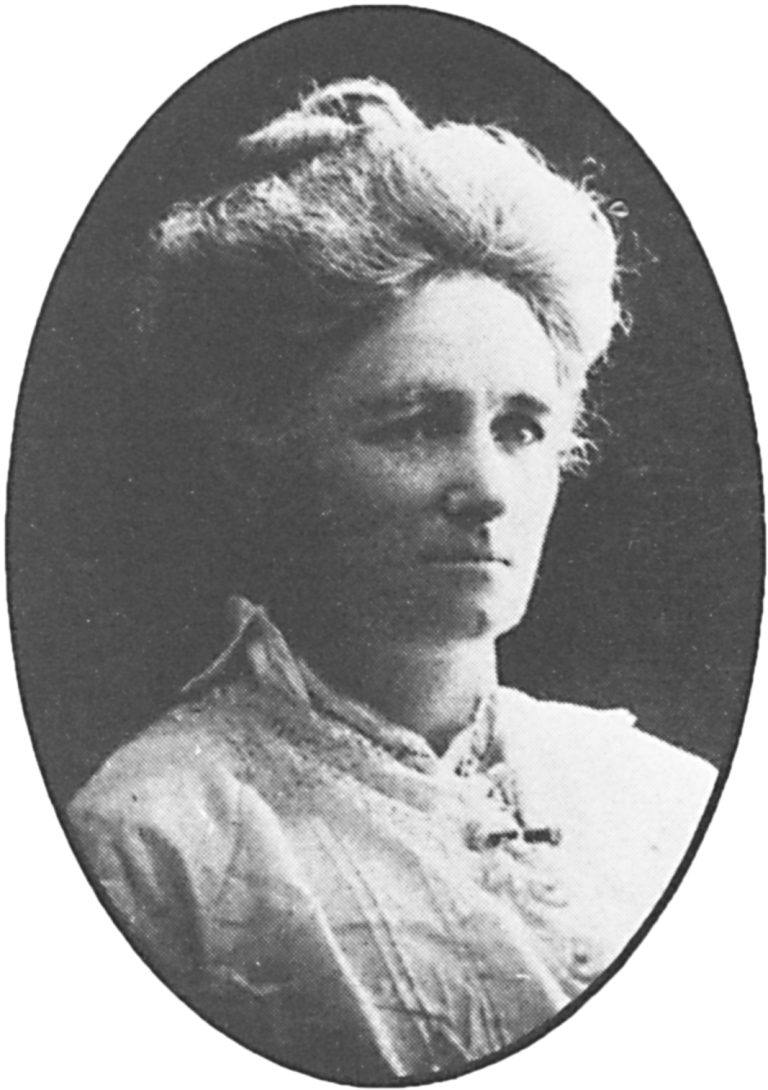
T. Humphrey & Co. (ca. 1910). Portrait photograph of Bella Guerin [Photograph]. University of Melbourne Archives, Bella Guerin Collection (2011.0089.00004)
COMMEMORATION
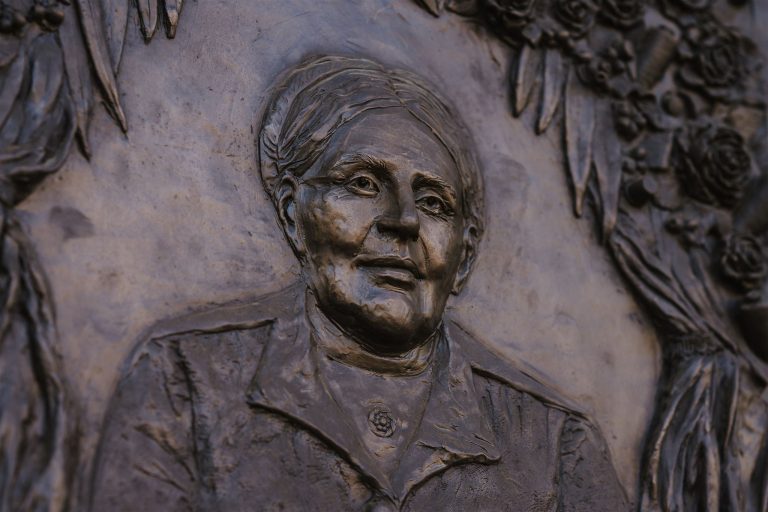
Bella Guerin has been commemorated through several place-namings that reflect her enduring legacy. Guerin Square at Federation University Australia’s Mount Helen campus in Ballarat, Victoria, was named in 2015 as part of a road‑naming project that honoured women who made significant contributions to the university’s history. The square is an internal site within the campus road and driveway network near student accommodation and facilities.
Bella Guerin Hall recognises her long association with education and her pioneering achievement as the first woman to graduate from an Australian university.
Her legacy has also been given national recognition: one of the tunnel boring machines used in Melbourne’s West Gate Tunnel Project was officially named “Bella”, following the Victorian tradition of naming such machines after notable women.
Guerin Place in the Canberra suburb of Chisholm commemorates her significance on a national scale.
VISIT
ACKNOWLEDGEMENT
This Biography was written by Her Place Museum using the below resources.
More Information
View Similar Profiles
Inspired by her story? Explore more women whose lives and contributions have helped shape Australia’s communities, culture and history.