1910 - 2005
Geraldine Briggs AO
 Aboriginal Rights
 Advocacy
 Politics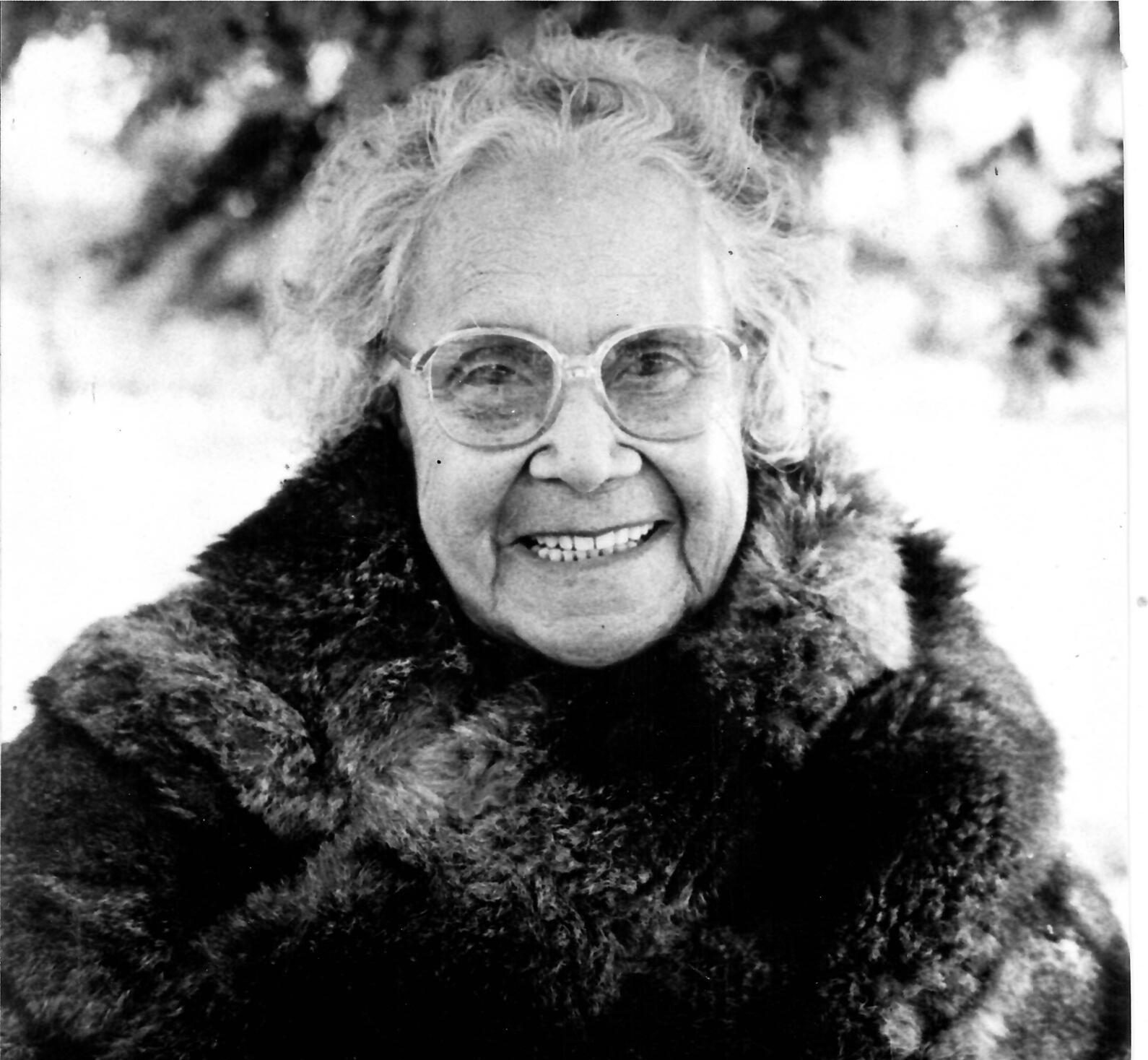
Watch
Aunty Geraldine Briggs was a highly respected Elder, the holder and teacher of Yorta Yorta language, cultural knowledge and lived experience of the period of transitioning from traditional to European lifestyle under the Aborigines Protection Act.
“We all work together so that our young ones can get somewhere, you know as well as I know, that none of our people are getting a fair go and if we work together, one people and we press on the government they’ve got to help us to get somewhere, we are all poverty stricken, well most of us are, and that’s not the way Australia should be” [1]
A compassionate and inspirational leader and role model who spent many years campaigning for equal rights Geraldine was a founding member and past president of the National Council of Aboriginal and Islander Women.
Born Geraldine Clements in 1910, on the Warangesda Aboriginal Mission in New South Wales, her mother was Yorta Yorta and her father Wiradjuri man from Brungle. Geraldine grew up on Moonacullah Aboriginal Reserve near Deniliquin. and spent time at Warangesda, Brungle and Cummeragunja Aboriginal Reserves.
“My first memory was being carried on my Aunt’s back in a possum skin rug… I thought it was lovely – going along – moving, you know, that was great! It used to put me to sleep” [2]
As a child, Geraldine often visited her grandfather George Middleton at the Cummeragunja Mission, where she settled after her marriage to Selwyn Briggs whose family lived on Cummeragunja.
“When I got married and moved on to Cummeragunja it became very obvious to me how the people were being treated including myself – my mother was told to move off the reserve because she spoke back to the manager – she told him – you’ll be gone before me, this is my tribal home” [3]
Once a thriving, self-sufficient settlement, conditions at Cummeragunja were beginning to deteriorate in the late 1930s as the New South Wales Aborigines Protection Board took greater control. Several painful episodes provided the catalyst for Briggs’ future activism.
Her grief at losing her first born child to illness was compounded by the refusal of the mission manager to provide transport to the Echuca hospital for emergency medical treatment. She once witnessed three children dying in a single day – and she lived with the trauma of her three sisters being forcibly removed from the family to the Cootamundra Girls Home. [4]
“ That will live with me always because it was a terrifying time, when we thought that a white man…was coming to take us away from our people, from our mothers and fathers”[5]
Geraldine’s experiences as a child and young mother at Cummeragunja Mission motivated her to fight for Aboriginal rights. In the Aboriginal tradition women had the responsibility of looking after the needs of children and family, Geraldine believed women played an integral role in improving outcomes for their communities, particularly in the areas of health and housing.[6]
“We had quite a good band of women who were really strong, and I think it was the women that showed their husbands that they needed to be stronger and fight for better conditions.”[7]
Her family was involved in the famous ‘Cummeragunja Walk-off’ in 1939, in which 200 residents spontaneously deserted the reserve. Settling in Shepparton, Geraldine became involved in the civil rights movement and along with her sister Margaret Tucker, was one of a delegation to make representation to the Prime Minister on Aboriginal rights. She and her husband Selwyn were involved in the establishment of a regional branch of the Aborigines Advancement League in Shepparton.
Geraldine was at the forefront of establishing the Federal Council for the Advancement of Aboriginal and Torres Strait Islanders (FCAATSI) in 1958. She went on to become the organisation’s Victorian State Secretary. Geraldine rallied support for the 1967 referendum to amend the constitution to include Aboriginal people in the national census.
In 1970, she joined other prominent women, including her sister Margaret Tucker, to establish a Victorian Aboriginal and Islander Women’s Council and later became the first president of the National Council of Aboriginal and Islander Women. The Council lobbied the government on issues affecting Aboriginal and Islander families including cultural preservation, land ownership, and the employment of Aboriginal welfare workers.
In turn, their efforts led to the creation of the Victorian Aboriginal Health Service and the Victorian Aboriginal Legal Service.
In 1991, she received the Order of Australia and was inducted into the Victorian Honour Roll of Women in 2001. At 82 years of age she won the Aboriginal of the Year Award.
Geraldine passed away in 2005. Her children continue to work to advance Equal Rights.
COMMEMORATION
‘Dana Djirrungana Dunguludja Yenbena-l’ Aboriginal Street Art Project
VISIT
ACKNOWLEDGEMENT
This Biography has been written in consultation with Dr. Lois Peeler AM- daughter of Geraldine Briggs AO and using the primary source: Worawa History Walk Book (2011) Worawa College and Melbourne City Council.
More Information
View Similar Profiles
Inspired by her story? Explore more women whose lives and contributions have helped shape Australia’s communities, culture and history.