1942-2017
Daisy Serong
 Advocacy
 Disability Pride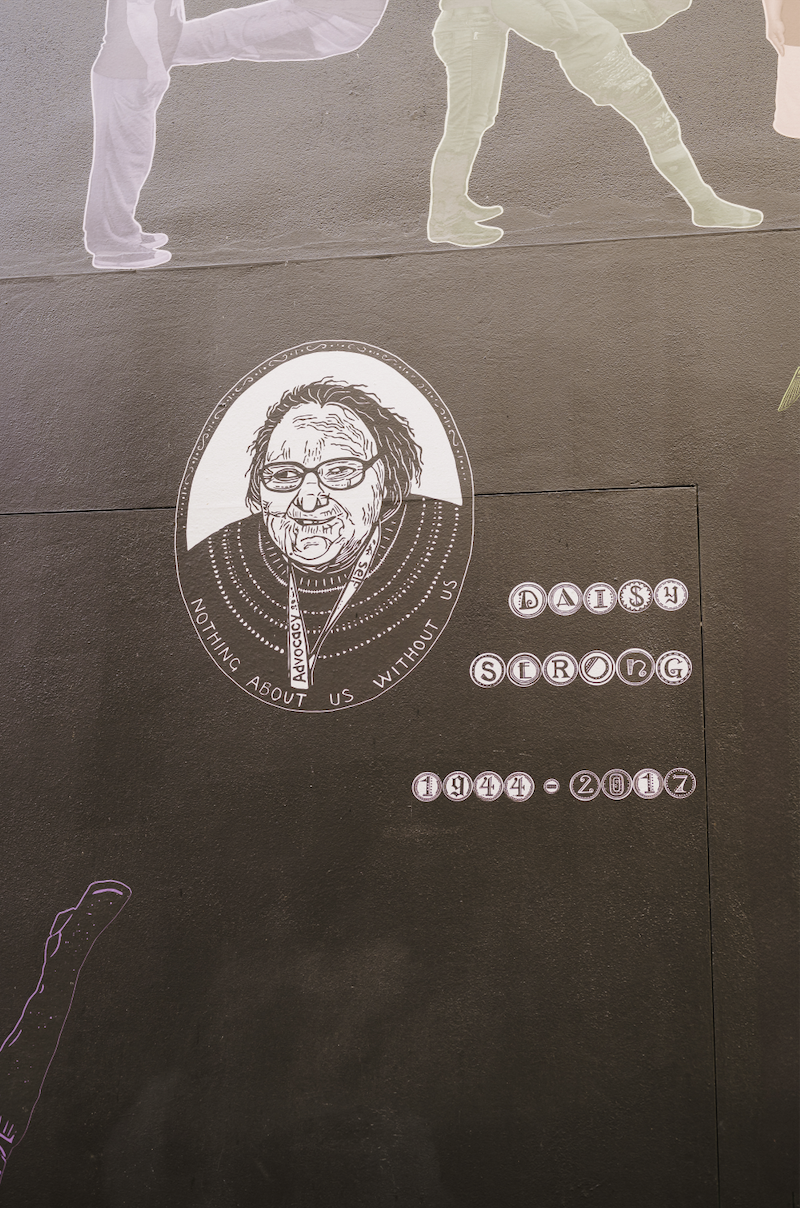
Disability rights advocate, peer educator, and champion for women with intellectual disabilities
It’s getting much better now, the world. It was too much: coming out from Caloola, going into the outside world…it got too much for me.[1]
Daisy Serong.
Daisy Serong was a disability rights advocate whose life and work helped shift attitudes towards people with intellectual disabilities in Victoria. Through self advocacy, peer education, and community activism, she challenged discrimination and worked to ensure that women with disabilities were recognised, heard, and respected.
Born in 1942, Daisy’s early life was shaped by institutionalisation and separation from family. She was removed from her mother as a young child and spent many years moving through institutional settings, including decades at the Caloola Training Centre (formerly the Sunbury Asylum). In total, Daisy lived in institutions for 32 years.
This history matters. It helps explain the strength and clarity of Daisy’s later advocacy, and why she was determined to learn her rights and insist on dignity and respect for people with intellectual disabilities.
In 1983, Daisy left Caloola and moved into the community. With support from citizen advocate Mary Day through Citizen Advocacy Sunbury, she began a new chapter grounded in self-determination. She described this period as the time she set about “learning my rights”, and it marked a turning point from institutional control to active leadership.
Daisy became a longtime member and supporter of Action for More Independence and Dignity in Accommodation (AMIDA), working to promote independent living and dignity for people with disabilities.
She also contributed her voice to reform processes by sharing firsthand evidence of institutional life. Daisy’s story was included in an AMIDA submission to Australia’s first Senate inquiry into violence, abuse and neglect against people with disability in institutional and residential settings. In that context, she was not presented as a symbol of harm, but as a witness and advocate whose lived expertise strengthened the case for change.
From the 1990s onward, Daisy worked as a peer educator with Women’s Health West in Footscray. She was involved in projects such as Empowering Women with Disabilities, which supported women in better understanding their health, rights, and opportunities. Her work focused particularly on women with intellectual disabilities, who often faced discrimination related to both gender and disability.
Daisy also used public platforms to advocate for change. She participated in Reinforce’s radio program Raising Our Voices, which provided opportunities for people with intellectual disabilities to speak publicly and advocate for their rights.
Daisy’s experiences also informed cultural and educational projects that explored institutional life and disability rights. Where these projects drew on her story, Daisy’s role should be understood as a contributor and catalyst for public understanding, not simply as “inspiration”. Through advocacy, education, and storytelling, she contributed to a broader movement that challenged institutionalisation and advanced the rights of people with disabilities.
People who knew Daisy remembered her as a thoughtful and determined advocate. Her contribution was recognised internationally when the book Global Perspectives on Disability Activism and Advocacy was dedicated to Daisy Serong and fellow advocate Helen Errington, acknowledging the influence of their lives on thinking about social change and justice.
Daisy Serong passed away in 2017. Her legacy lives on in the reforms she helped advance, the women she supported through peer education, and her clear message to the world: people with disabilities have rights and can speak up.
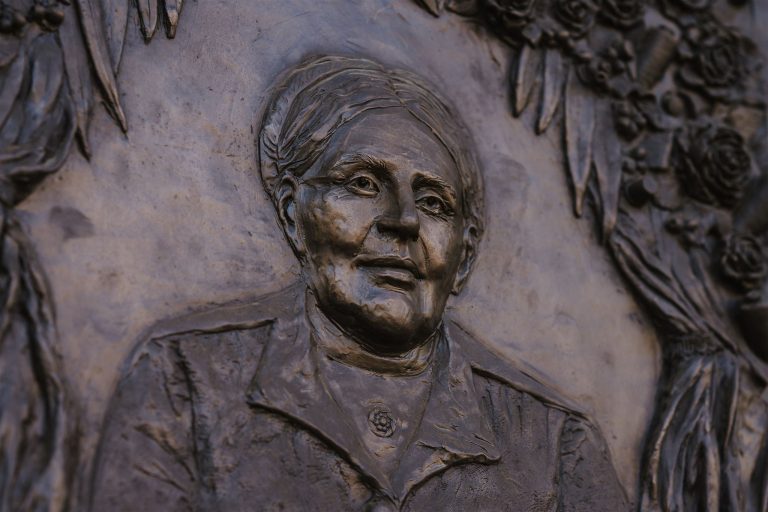
Image: Daisy Serong featured in Disability Pride Mural Royal Lane by Larissa Mc Farlane, Photographer Breanna Dunbar, Her Place Women’s Museum 2025.
COMMEMORATION
Daisy Serong is honoured in Larissa McFarlane’s Disability Pride mural in Royal Lane, Melbourne. The mural is a tribute to the disability rights movement and includes Daisy’s words: “I have rights. I can speak up.”
The mural features the words “Disability Pride” formed by silhouettes of local people with disabilities, and it includes portraits of six influential women: Lesley Hall OAM, Stella Young, Aunty Gayle Rankin, Daisy Serong, Dr Margaret Cooper OAM, and Laura Hershey. The work is a public statement of pride, resilience, and collective strength in the disability community.
VISIT
ACKNOWLEDGEMENT
This biography was written by Her Place Women’s Museum using the resources listed below
More Information
View Similar Profiles
Inspired by her story? Explore more women whose lives and contributions have helped shape Australia’s communities, culture and history.