1928 – 2018
Mirka Mora
 Arts & Culture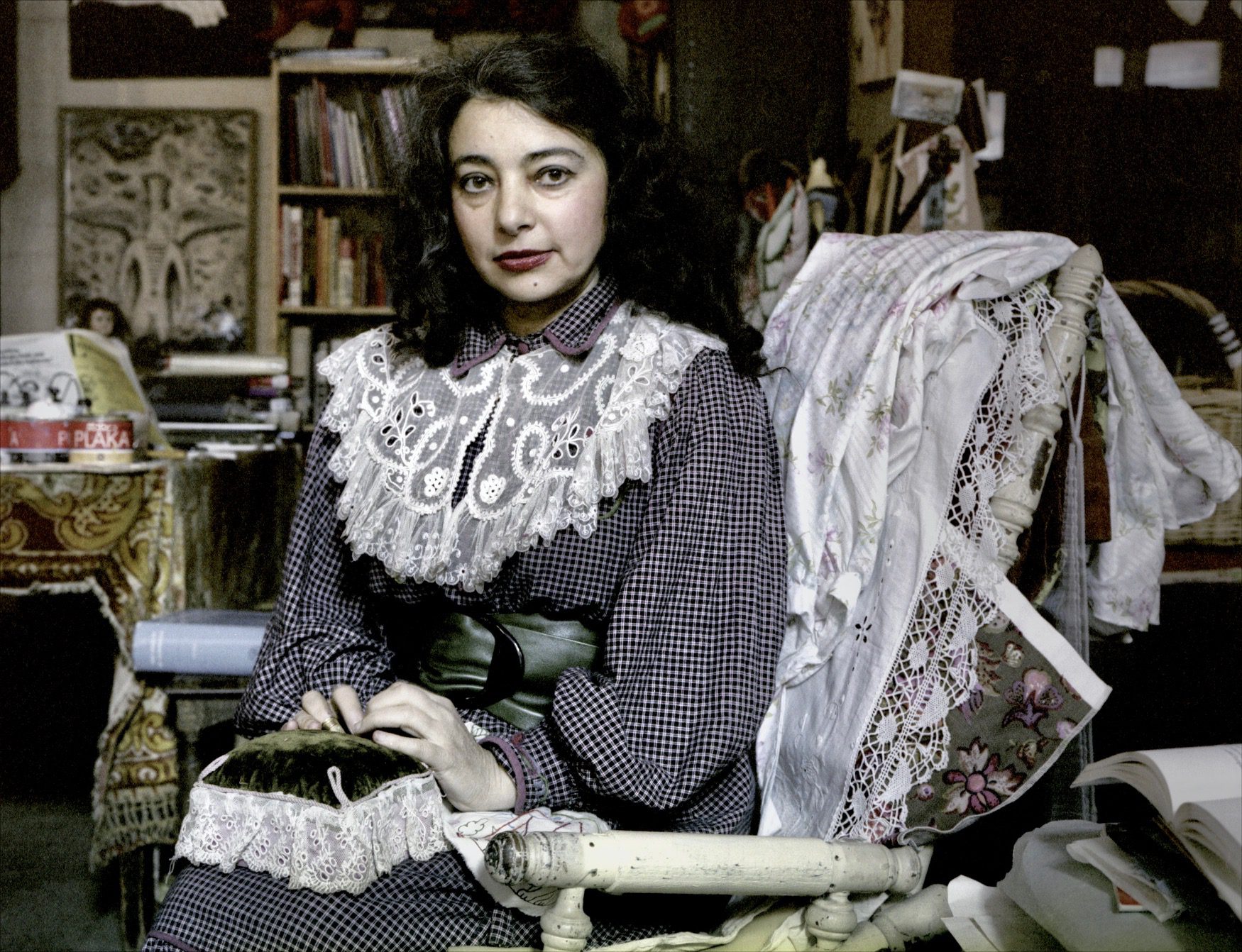
Every time you show your work, you really show your soul.
— Mirka Mora 1
Mirka Mora was one of Melbourne’s most beloved artists and cultural figures. A prolific multimedia artist, her joie de vivre, vivid imagination, and boundless creativity infused Melbourne’s art scene, streets, and broader culture with life.
Mirka played a pivotal role in shaping contemporary art in Australia. Her whimsical and dreamlike works are celebrated in major institutions including the Heide Museum of Modern Art, the National Gallery of Australia, the National Gallery of Victoria, the State Library, the Warrnambool Art Gallery collections
Mirka believed art should be accessible to everyone. Beyond galleries, Mirka’s artistic touch adorns Melbourne’s streets with striking murals and mosaics, and she was the first artist to paint a Melbourne tram. Her talents extended to the making of soft sculptures, famously known as Mirka Dolls, and ceramics, as well as sets and masks for theatre performances.
Childhood and Resilience
Born in Paris in 1928 to a Lithuanian Jewish father, Leon Zelik, and a Romanian Jewish mother, Celia Gelbein, Mirka’s worldview was shaped by intense experiences during World War II. At 14, she was arrested with her mother and sisters and imprisoned in the Pithiviers transit camp in Nazi-occupied France. Facing the terrifying threat of deportation to Auschwitz, the family narrowly escaped after Mirka’s father forged a letter securing their release. Forced into hiding in the French countryside for the remainder of the war, these challenging experiences profoundly impacted Mirka’s outlook on life.
Mirka’s vibrant, dreamlike worlds filled with whimsical characters became a way to reclaim light, beauty and joy from the darkness she had survived— a bold declaration of her unbreakable spirit.
Arrival in Melbourne and Flourishing Art Career
After the war, Mirka met Georges Mora, a French resistance fighter, in Paris. They married in 1947 and moved to Melbourne in 1951 with their young son, Philippe. Initially working as a self-taught dressmaker, Mirka soon immersed herself in art, exploring everything from drawing and painting to sculpture, mosaics, embroidery, and doll-making.
Mirka and Georges settled at 9 Collins Street, which became the heart of Melbourne’s bohemian scene. In 1954, they opened Mirka Café, a vibrant gathering spot for the Contemporary Art Society, artists, actors, musicians, and art lovers from around the world. They later established the European-style Balzac restaurant in East Melbourne and the iconic Guy Grossi’s Mirka at Tolarno Hotel in St Kilda, which Mirka decorated with murals, cementing their influence in Melbourne’s cultural landscape.
Mirka extended her artistic reach to Melbourne’s public spaces, with striking mosaics adorning Flinders Street Station and a seat on the St Kilda foreshore and a vibrant mural in Acland Street St Kilda.
Pioneering Soft Sculpture and Challenging Art Norms
After separating from Georges in the 1970s, Mirka developed a distinctive art style combining fabric and paint in her soft sculptures and embroideries. At a time when soft sculpture was often dismissed by art critics as “feminine” and “crafty,” Mirka’s work challenged stereotypes and shifted perceptions, showing that textiles are just as significant as any other art form. Her innovative approach paved the way for other textile artists to gain recognition from galleries and art critics.
Later Years and Lasting Legacy
In 2016, Mirka’s unstoppable creativity led to a memorable collaboration with Australian fashion label Gorman. In her later years, Mirka remained a beloved icon, conducting workshops in painting, soft sculpture, and mosaics, and sharing her unique approach with countless Australians and art enthusiasts worldwide.
In her 70’s Mirka offered glimpses into her extraordinary life through her autobiographies, Wicked but Virtuous (2000) and Love and Clutter (2003).
Mirka passed away in 2018 at the age of 90 and was the first female artist to receive a Victorian State Memorial.
Mirka Mora’s six-decade-long artistic legacy continues to captivate, inspire, and enrich Melbourne’s cultural fabric.
The Estate of Mirka Mora is respresented by William Mora Galleries.
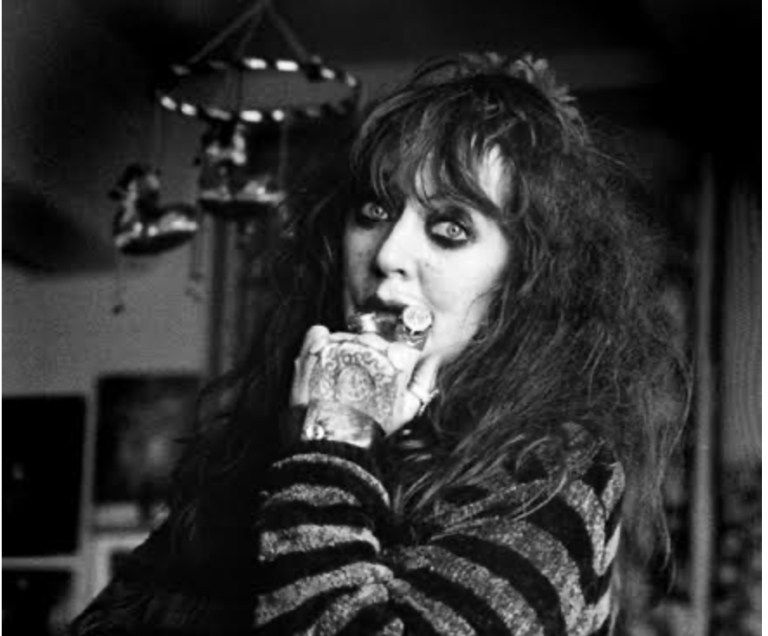
Photography Credit – Mirka Mora in her studio Rankins Lane, Melbourne 1977. Photographer Copyright Stella Sallman
Explore: “Mirka’s St Kilda,” a walking tour developed by the City of Port Phillip and the Jewish Museum of Australia, celebrates Mirka Mora’s life and art. Walks in Port Phillip – MIRKA’S ST KILDA
COMMEMORATION
A vibrant mural honouring Mirka Mora adorns 77 Fitzroy Street, St Kilda. This striking artwork by french muralist TETAL depicts Mora as both a young and older woman. Commissioned by the Fitzroy Street Business Association (FSBA) and funded through a Port Phillip Council Love My Place grant, the mural has become a notable landmark. In 2001, Mirka Lane in St Kilda was named in her honour.
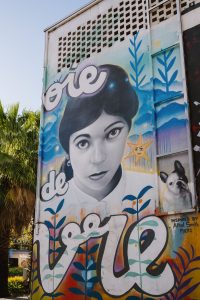
Mirka Mora Mural by Tetal – St Kilda. Breanna Dunbar Photography
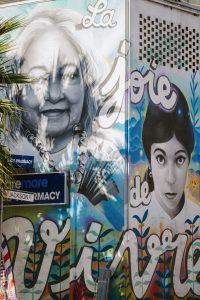
Mirka Mora Mural by Tetal – St Kilda. Breanna Dunbar Photography
VISIT
ACKNOWLEDGEMENT
This Biography was written by Her Place Women’s Museum in collaboration with William Mora Galleries
More Information
View Similar Profiles
Inspired by her story? Explore more women whose lives and contributions have helped shape Australia’s communities, culture and history.